
Pick a pressure cooker when you decide on dinner after work and need it fast. Pick a slow cooker when you can set things up in the morning and let the day do the work. That is the whole decision in one sentence, and most kitchens actually benefit from having both.
- Pressure cooker win: dried beans, ready in about 30 minutes with no soaking, or a weeknight pot roast that’s tender in under an hour.
- Slow cooker win: a Sunday-morning pulled pork or chili you load before work and forget about for eight hours.
Multicookers like the Instant Pot combine pressure and slow functions in one pot, but they cut corners on the slow-cook side. More on that below.
Key Takeaways
Choosing between a pressure cooker and a slow cooker comes down to timing your decision, not which appliance cooks “better” overall.
| Point | Details |
|---|---|
| Speed favors pressure cooking | Beans, stocks, and tough cuts cook up to 70% faster under pressure than by conventional methods. |
| Convenience favors slow cooking | Slow cookers run 6 to 10 hours hands-off, ideal for morning prep and evening pickup. |
| Nutrient retention often favors pressure | Shorter cook times and less water exposure typically preserve more water-soluble vitamins. |
| Multicookers compromise, not replace | They handle both functions but can underperform on large, dense roasts versus dedicated slow cookers. |
| Accessories matter for either choice | SavyCart carries gaskets, liners, and measuring tools that support both appliance types. |
Table of Contents
- Pressure Cooker vs Slow Cooker: How Pressure Cooking Actually Works
- Pressure Cooker vs Slow Cooker: How Slow Cooking Works
- Which Appliance Wins on Time, Texture, and Cost?
- What Test Kitchens and Nutrition Research Actually Show
- Do Multicooker Machines Actually Replace Both?
- How to Choose the Right Cooker for Your Kitchen
- What Food-Safety Rules Apply to Both Appliances?
- Where to Find Reliable Gear for Either Cooking Style
- Frequently Asked Questions
- Sources
Pressure Cooker vs Slow Cooker: How Pressure Cooking Actually Works
A pressure cooker seals in steam so pressure builds and the boiling point of water climbs well above 212°F. That higher internal temperature is the entire trick: food cooks faster because it’s exposed to more heat energy, not because of some special chemistry. Pressure cooking cooks many foods 3 to 10 times faster than conventional methods, and it typically cuts total cooking time by around 70%.
That speed is where it earns its keep: tough cuts like brisket or chuck roast turn tender in under an hour instead of three or four, dried beans skip the overnight soak, and stocks pull deep flavor from bones in 45 minutes instead of half a day. It’s also genuinely efficient, since less water and shorter run times mean less energy spent overall.
The trade-off is texture and attention. Pressure cooking tenderizes fast but doesn’t always deliver the fall-apart shred a slow braise gives you, and timing matters more than people expect.
- Pros: speed, better nutrient retention than boiling, energy efficient, great for beans and grains.
- Cons: requires active monitoring at the start, less forgiving on timing, can’t peek inside mid-cook.
Pro Tip: Set a timer the moment pressure builds, not when you turn the appliance on. A minute or two of drift can turn crisp green beans into mush.
Pressure Cooker vs Slow Cooker: How Slow Cooking Works
A slow cooker holds food at a low, steady temperature for hours, usually 6 to 10 hours on low or 4 to 6 on high. That gentle heat slowly breaks down collagen in tougher cuts, which is why a $6-a-pound chuck roast comes out fork-tender by dinnertime. Flavors also have time to meld in ways a 45-minute cook can’t quite replicate.
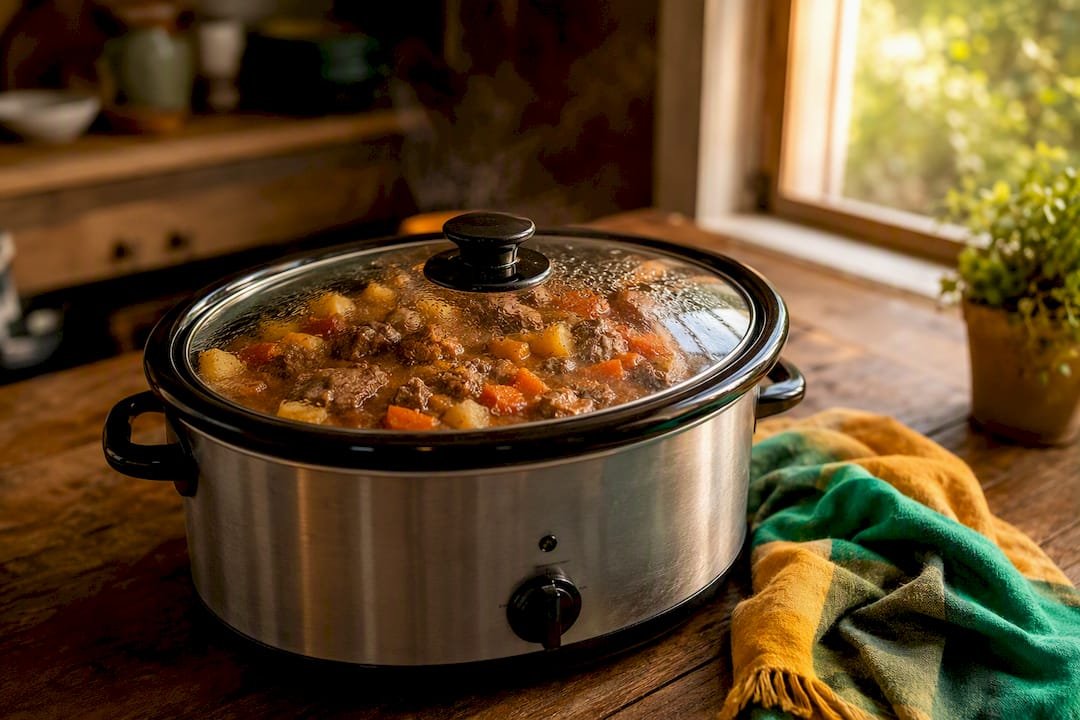
Where it really shines is convenience. Load it in the morning, walk away, and dinner is ready when you get home, no active monitoring required. It also handles large volumes well (think chili for a crowd) and doubles as a warming station for parties.
The limits: there’s minimal evaporation, so sauces stay thinner and flavors less concentrated unless you reduce them separately afterward. Delicate items like fish or crisp vegetables don’t do well over that long a cook.
- Pros: hands-off, forgiving on timing, excellent for tough or cheap cuts, keeps food warm for serving.
- Cons: less flavor concentration, weaker on quick weeknight meals, not built for anything delicate.
Pro Tip: Sear meat in a skillet before it goes into the slow cooker. That one step adds the browned flavor the appliance itself can’t produce.
Which Appliance Wins on Time, Texture, and Cost?
| Factor | Pressure cooker | Slow cooker |
|---|---|---|
| Typical cook time | 30–60 minutes | 4–10 hours |
| Texture/flavor | Fast tenderizing, less reduction | Fall-apart texture, deeper meld |
| Versatility | Rice, beans, stocks, sears, steams | Soups, stews, roasts, warming |
| Ease of use | Requires setup and monitoring at start | True set-and-forget |
| Safety & monitoring | Locks and valves, needs attention at release | Minimal monitoring once loaded |
| Cleaning & maintenance | Gasket and valve care needed | Simple insert, dishwasher-safe often |
| Energy use | Lower, shorter run times | Low wattage, but runs much longer |
| Typical price | $60–$150 for electric models | $30–$80 for standard models |
| Best for | Weeknight meals, beans, stock | Batch cooking, entertaining, hands-off days |
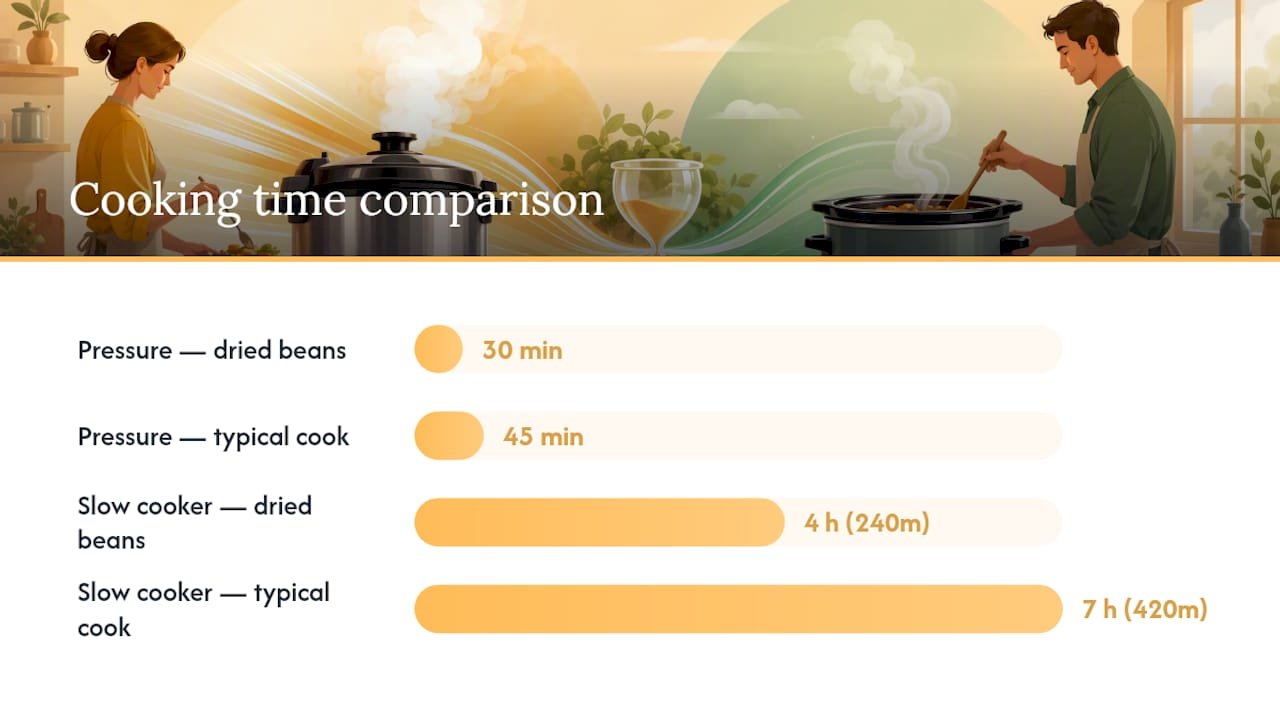
A few concrete numbers make the gap obvious. Dried black beans go from a four-hour simmer to about 30 minutes under pressure. A pot roast that takes many hours in a slow cooker cooks in under an hour under pressure.
For most households, the decision comes down to when you plan dinner. If you know your Tuesday night menu on Monday morning, a slow cooker works fine. If you’re improvising after a long day, pressure wins on time, almost every time.
What Test Kitchens and Nutrition Research Actually Show
Side-by-side experiments from Serious Eats’ Food Lab found pressure-cooked stocks came out richer and more concentrated in a fraction of the time, while slow-cooked stocks were thinner unless reduced separately afterward. That tracks with the broader pattern: pressure cooking wins on speed and concentration, slow cooking wins on gentle flavor development over time.
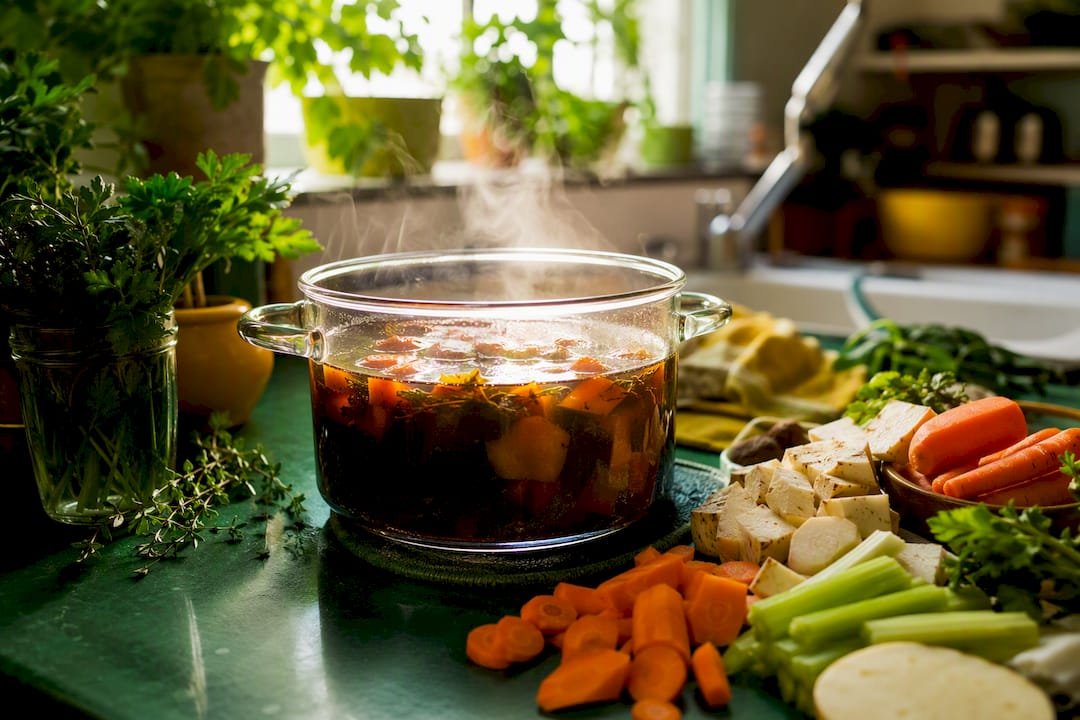
On nutrition, the research points one direction. Pressure cooking’s shorter cook time, lower water volume, and reduced oxidation mean it typically preserves more water-soluble vitamins than boiling, particularly in legumes and whole grains. That doesn’t make slow cooking nutritionally worse across the board. If you’re making a soup or stew and drinking the broth, you’re recapturing whatever nutrients leached into the liquid either way.
Pro Tip: If nutrient retention matters more than convenience, cook vegetables just until tender in a pressure cooker rather than leaving them for the full cycle meant for meat.
Do Multicooker Machines Actually Replace Both?
An electric multicooker like the Instant Pot bundles a pressure function with a slow-cook mode, a rice setting, and often a saute button, all in one pot. That versatility is genuinely appealing if counter space or budget is tight.
The catch shows up with big, dense loads. Testers have found some multicookers don’t fully tenderize a large pot roast on an extended slow setting the way a dedicated slow cooker does, even when the display says the cycle finished.
- Choose a multicooker if you cook mostly solo or for a small household and want one appliance for weeknight pressure meals plus occasional slow cooking.
- Choose dedicated appliances if you regularly cook large roasts overnight, host often, or rely heavily on all-day slow cooking.
How to Choose the Right Cooker for Your Kitchen
Capacity should match your household, not your ambitions. A 3-quart model suits one or two people; 6 quarts covers a family of four; 8 quarts or more makes sense if you batch-cook or host regularly.
Safety features are non-negotiable on pressure cookers. Modern electric models include spring-loaded locks, dual pressure regulators, and multiple relief valves that make them far safer than the stovetop cookers your grandmother may have used. Look for a visible pressure indicator and a locking lid that won’t open until pressure has fully released.
Wattage matters more for multicookers than dedicated slow cookers, since a stronger heating element reaches pressure faster. Removable, dishwasher-safe liners save real time on cleanup, and gaskets on pressure cookers should be replaced every year or two once they lose their seal.
- Budget $30 to $50 for a basic slow cooker with removable insert.
- Budget $60 to $150 for an electric pressure cooker or multicooker with solid safety certifications.
- Spend more only for programmable delay-start timers or extra-large capacity if you actually need them.
Pro Tip: A loose or cracked gasket is the most common reason a pressure cooker won’t build pressure. Check it before assuming the appliance is broken.
What Food-Safety Rules Apply to Both Appliances?
Poultry needs to reach an internal temperature of 165°F regardless of which appliance cooks it, and any leftovers should go in the fridge within two hours to avoid bacterial growth.
- Thaw meat fully before slow cooking; frozen cuts spend too long in the temperature danger zone.
- Layer dense vegetables like potatoes on the bottom of a slow cooker, closer to the heat source.
- Keep a minimum amount of liquid in a pressure cooker and always release pressure per the manual before opening.
- Wipe gaskets after every pressure-cooker use and check inserts for cracks before each slow-cooker cycle.
Balancing Speed and Convenience in Real Kitchens
If you plan dinner the night before, buy a slow cooker. If you decide what’s for dinner after you’ve already clocked out, a pressure cooker will save your evening. Households that cook often for a crowd, or juggle both moods depending on the week, tend to end up owning both, and using each one for what it actually does best.
Where to Find Reliable Gear for Either Cooking Style
SavyCart doesn’t sell the appliances themselves, but it’s a straightforward stop for the small accessories that keep either one running well: extra gaskets, silicone liners, and measuring tools that make portioning beans or broth less of a guessing game. As a site-owned marketplace, SavyCart earns a margin on items purchased through the store, which keeps prices competitive and shipping fast.
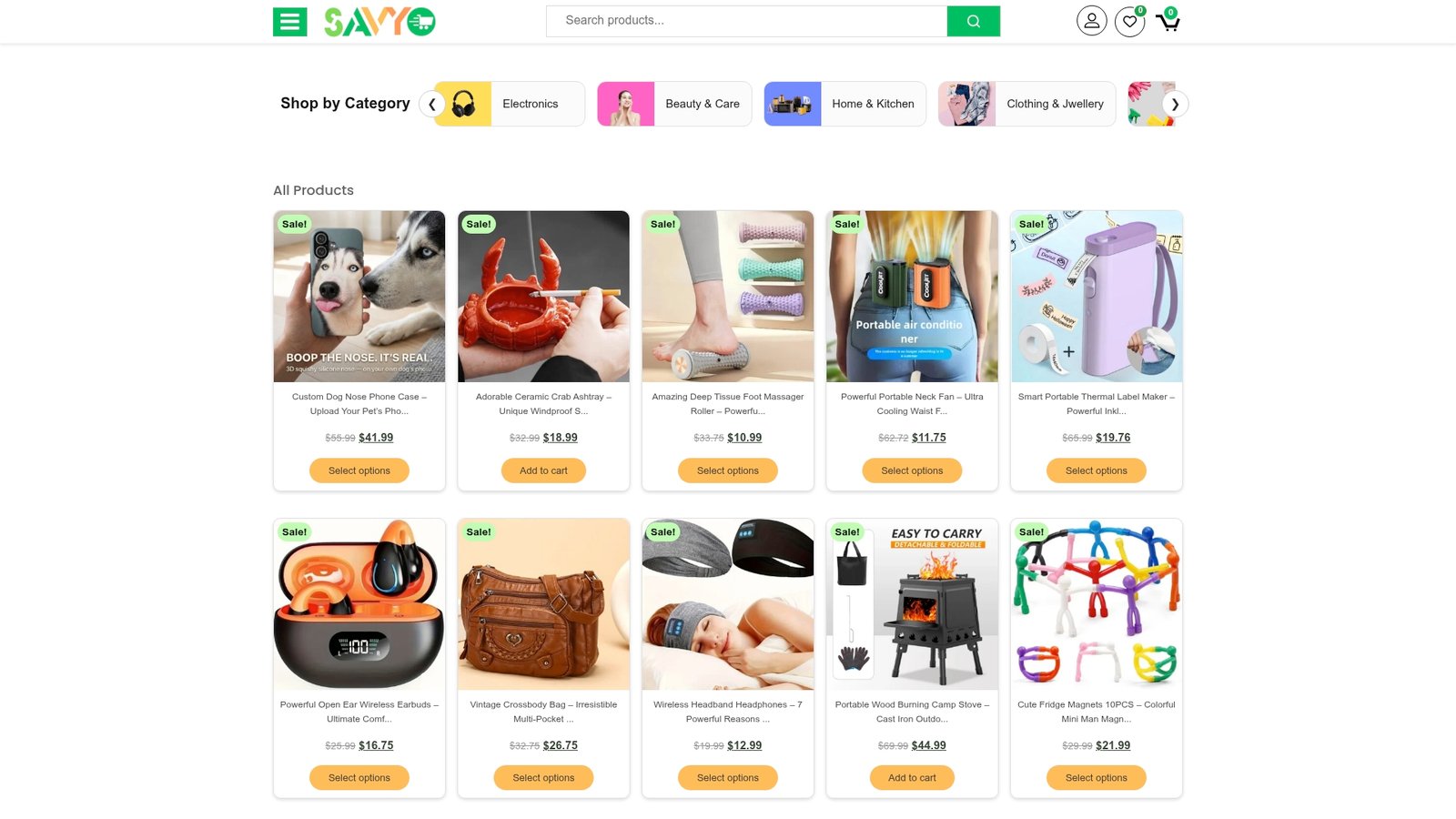
If you’re stocking a kitchen from scratch, the back-to-school essentials guide is worth a look for practical household picks beyond just cooking gear. Browse the SavyCart storefront for gasket replacements, storage containers, and the small tools that make either appliance easier to live with day to day.
Frequently Asked Questions
Is a pressure cooker healthier than a slow cooker?
Pressure cooking often retains more water-soluble vitamins because of shorter cook times and less water exposure, but slow-cooked soups and stews recapture nutrients through the broth itself.
Can an Instant Pot replace a Crock-Pot entirely?
For most everyday meals, yes. For large roasts or high-volume batch cooking over many hours, a dedicated slow cooker still tends to perform more reliably.
Is a Dutch oven a substitute for either appliance?
A Dutch oven works on the stovetop or in the oven and gives you more control over browning and reduction, but it needs active supervision that neither electric appliance requires.
Which is cheaper to run, a pressure cooker or a slow cooker?
Pressure cookers use less total energy because of shorter run times, while slow cookers use very low wattage but for many more hours, so actual costs land close to each other.
What’s the biggest mistake beginners make with a pressure cooker?
Overcooking vegetables. Because the cook time is so short, an extra minute or two under pressure can turn crisp vegetables to mush fast.
Sources
- FSHN22-10/FS446: The Misconceptions about Electric Pressure Cookers
- Which is Healthier: Pressure Cooking or Boiling?
- Can I Make Stock in a Pressure Cooker or Slow Cooker? | Ask The Food Lab
- Pressure Cooking | Live Well | Washington State University
- Healthy meals using slow cooker
Inline citations throughout the article point to the specific claims each source supports.
Recommended
- 50-Cube Ice Maker with Easy Press Cap with Easy-press Lid Large Capacity Ice Cube Machine Reusable Food-grade Ice Cube Mold – SavyCart
- This $14 Keyboard Cleaner Tool Kit Is Blowing Minds
- Mini Chainsaw Cordless – Lightweight Portable Electric Tree Pruning Saw with Rechargeable Battery – SavyCart
- SavyCart – Spend Less, Shop Big